Shindō Musō‑ryū Jōdo
Jodo Keiko Kai of Delaware
Muso Gonosuke
Muso Gonosuke was a 17th-century samurai who transformed a personal defeat into a revolutionary martial art after losing his only recorded duel to the legendary Miyamoto Musashi. Following his loss, Gonosuke retreated to Mount Homan to meditate, eventually receiving a divine vision that inspired him to create the jo, a 4-foot wooden staff designed to bridge the gap between the speed of a sword and the reach of a spear. Armed with this new weapon, Gonosuke famously engaged Musashi in a rematch and emerged victorious—the only person to ever best the “Sword Saint”—by using the staff’s versatility to neutralize Musashi’s dual-sword style. This victory established Shindō Musō‑ryū Jōdo, a discipline that survives today, focusing on the precise use of the staff to overcome an edged weapon through superior timing, distance, and adaptability.
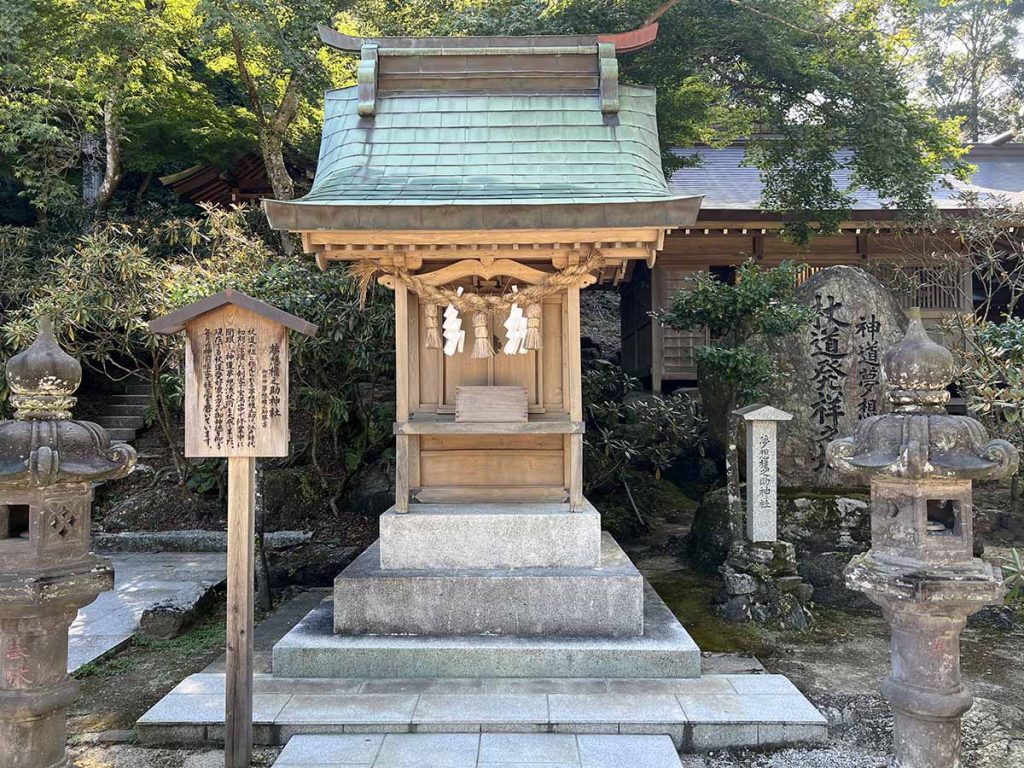
Muso Gonosuke Jinja, a sub-shrine located within the grounds of the larger Kamado Shrine in Dazaifu, Fukuoka Japan
Shimizu Takaji Sensei
Widely considered the most influential figure in modern Jodo history. While Muso Gonosuke created the art, Shimizu is the man who saved it from obscurity and brought it to the world. The Rembukan (meaning “Hall of Martial Valor”) was the legendary dojo in Tokyo established by Shimizu Sensei in the early 20th century. It served as the global headquarters for Shindo Muso-ryu and is the ancestral home of modern Jodo.
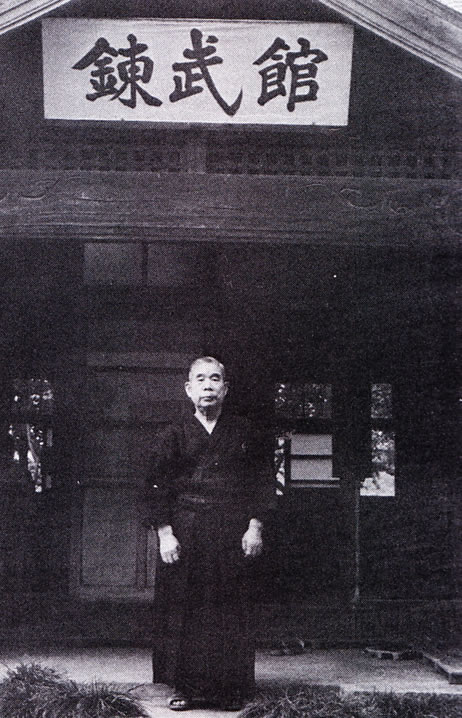
Beikoku Rembukan Dojo
A machi dojo is a private, neighborhood martial arts school that prioritizes the authentic preservation of a lineage over commercial success or sport competition. Unlike large-scale institutional or “franchise” schools, machi dojos are often spartan, independent spaces where the head instructor maintains total control over training standards and student intake. A machi dojo is where the “real work” happens away from the public eye—it’s a place for serious practitioners who want the direct, unwatered-down transmission of Shimizu Takaji’s Jodo. In this environment, the focus remains entirely on the direct transmission of technique and the cultivation of character, making the dojo the essential backbone for keeping the Shindō Musō‑ryū Jōdo tradition alive in their purest form. The Beikoku Rembukan is a prime modern example of what defines a true machi dojo.
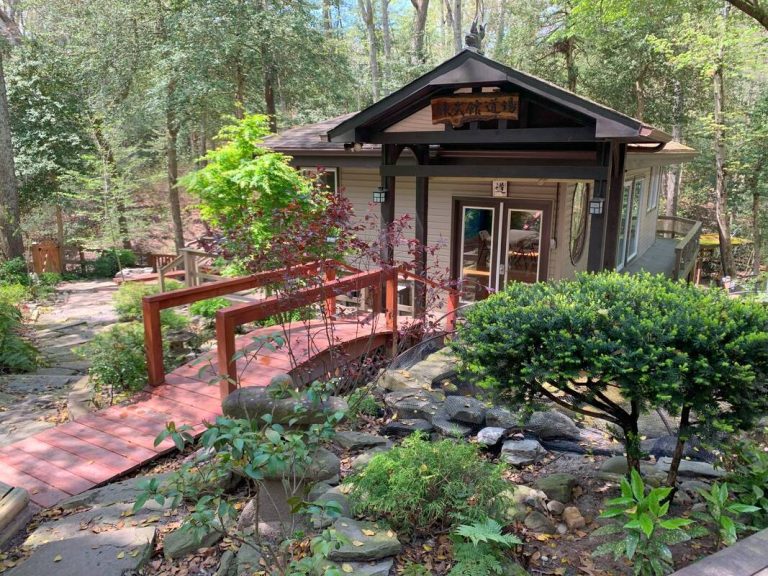
Jodo Keiko Kai of Delaware
A practice group dedicated to the study and transmission of Shindō Musō‑ryū Jōdo
The Tokyo Rembukan served as the central training dojo under Shimizu Sensei. Following its closure, transmission continued through his senior students. The continuity of the art rests in direct transmission from teacher to student.
The Jodo Keiko Kai of Delaware continues this transmission through direct instruction within this line.
The instructor of the Jōdo Keiko Kai of Delaware holds a Menkyo-level licence within this lineage received through direct instruction under Rick Polland, Menkyo Kaiden and Beikoku Rembukan Kaicho.
This line of transmission descends from Shimizu Takaji through Kaminoda Tsunemori and Osato Kohei.